October 2024 marked the beginning of an extraordinary high-altitude pilgrimage to one of India’s most revered
spiritual sanctuaries. Tucked away deep in the Garhwal Himalayas at 3,583 meters above sea level, the trek to
Kedarnath is far more than a physical journey. It is a profound test of human endurance, mental strength and
spiritual calling. As travelers traverse rugged mountain trails, roaring rivers and sweeping glacial vistas,
the simple path of a pilgrim transforms into an unforgettable epic that challenges patience, faith and the
human spirit.
Kedarnath, where the beauty of nature meets the divinity of spirituality. Uncover the inspiring beauty of the
Nature!
The dream began almost four months before the journey itself. Like thousands of travelers during the Durga Puja
vacation season, we also rushed to book train tickets from Howrah to Haridwar on the very first opening day.
Even after trying within minutes, most of our tickets ended up on the waiting list. Our return tickets, booked
for eleven days later, also suffered the same fate. We kept hoping the waiting tickets would eventually get
confirmed, but even ten days before the journey there was barely any movement.
At one point, we even planned an alternative route through Delhi. The idea was to take a flight to Delhi first
and then continue to Haridwar by train, bus or shared cab. Meanwhile, we continuously monitored railway updates
and special train announcements because during previous years, Indian Railways had introduced Puja special
trains. Finally, around fifteen days before departure, a special train was announced and this time we managed
to secure confirmed tickets. It felt like the journey itself had finally received Lord Shiva’s blessing.
Sacred Journey
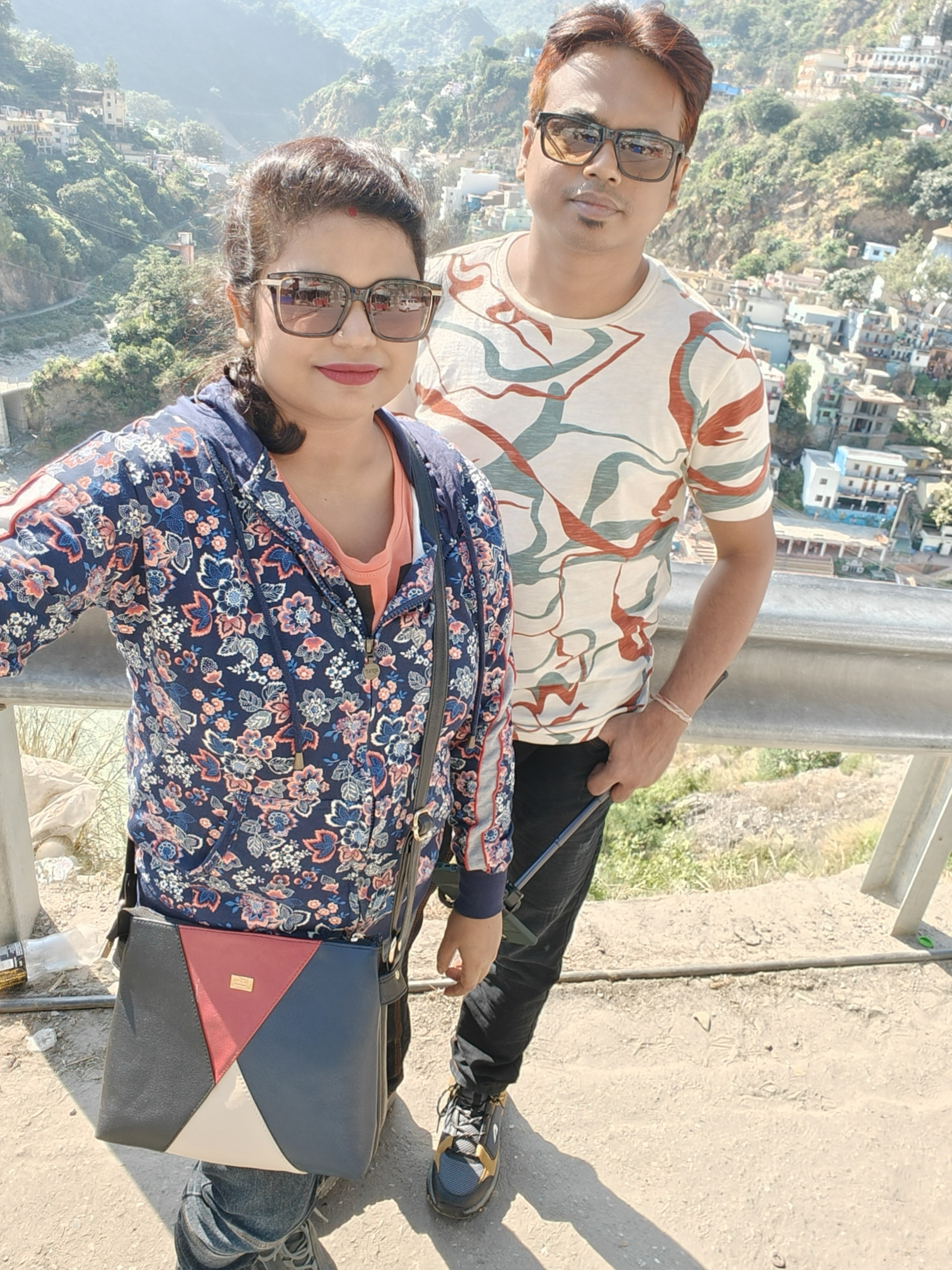
Our team stands united against the majestic backdrop of towering Himalayan peaks at Kedarnath temple.
Divine Chants
Immerse your soul in the resonant evening bells and mystical prayers echoing through the mountain
valleys.
Kedarnath Chronicles
Explore the ancient historical origins, legendary tales and structural architectural secrets of this
divine shrine.
Reach Haridwar
Finally, on the morning of October 13, 2024, we reached Haridwar by train. The cool morning air, the spiritual
atmosphere and the sight of pilgrims moving toward different Himalayan shrines instantly gave us a feeling that
the adventure had truly begun.
Without wasting much time, we booked a private car from Haridwar toward Sonprayag. The road journey itself was
breathtaking. The mountains slowly appeared closer, rivers rushed beside the roads and every turn felt
cinematic. During the journey, we stopped at Dhari Devi Temple, one of the most spiritually significant temples
of Uttarakhand. Located beside the Alaknanda River, the temple gave us our first deep spiritual pause before
entering the harsher Himalayan terrain.
The distance from Haridwar to Sonprayag or Sitapur is around 228 kilometers and generally takes 7 to 10 hours
depending on traffic, weather, halts and sightseeing stops. Travelers usually have two options for this route —
booking a private vehicle or taking buses available from Haridwar and Rishikesh.
Reach Gaurikund
As many travelers already know, vehicles cannot directly reach Kedarnath. The last motorable point is Gaurikund,
accessible only through local shuttle services operating between Sonprayag and Gaurikund. Private vehicles are
stopped at Sonprayag and from there everyone must depend on local Sumo or shuttle taxis.
After reaching Sonprayag in the evening, we boarded one of those crowded local shuttle vehicles and finally
reached Gaurikund. The short 5-kilometer ride took around 20 minutes, but because of the rush during pilgrimage
season, it felt much longer.
We had already booked our hotel in Gaurikund nearly two months earlier because accommodation becomes difficult
during peak yatra season. Staying at Gaurikund was part of our plan because the Kedarnath trek starts directly
from there, allowing an early morning departure.
There are multiple stay options available at Sonprayag, Sitapur and Gaurikund. Many travelers use booking
platforms, but direct hotel booking often becomes cheaper and more reliable. During the season, around 15-20
hotel and lodge options remain available across these locations.
That night in Gaurikund felt different. Pilgrims were preparing backpacks, arranging rain covers, buying walking
sticks and discussing weather updates. Everyone had the same destination, but every traveler carried a
different story.
Journey Begins
Setting out early in the morning with hearts full of devotion for the sacred trek.
Morning Beauty
Watching the glorious golden rays of sunrise slowly illuminate the high peaks of the Himalayas.
Shivpuri Ganges
The crystal clear turquoise waters of the holy Ganges flowing past the sandy banks of Shivpuri.
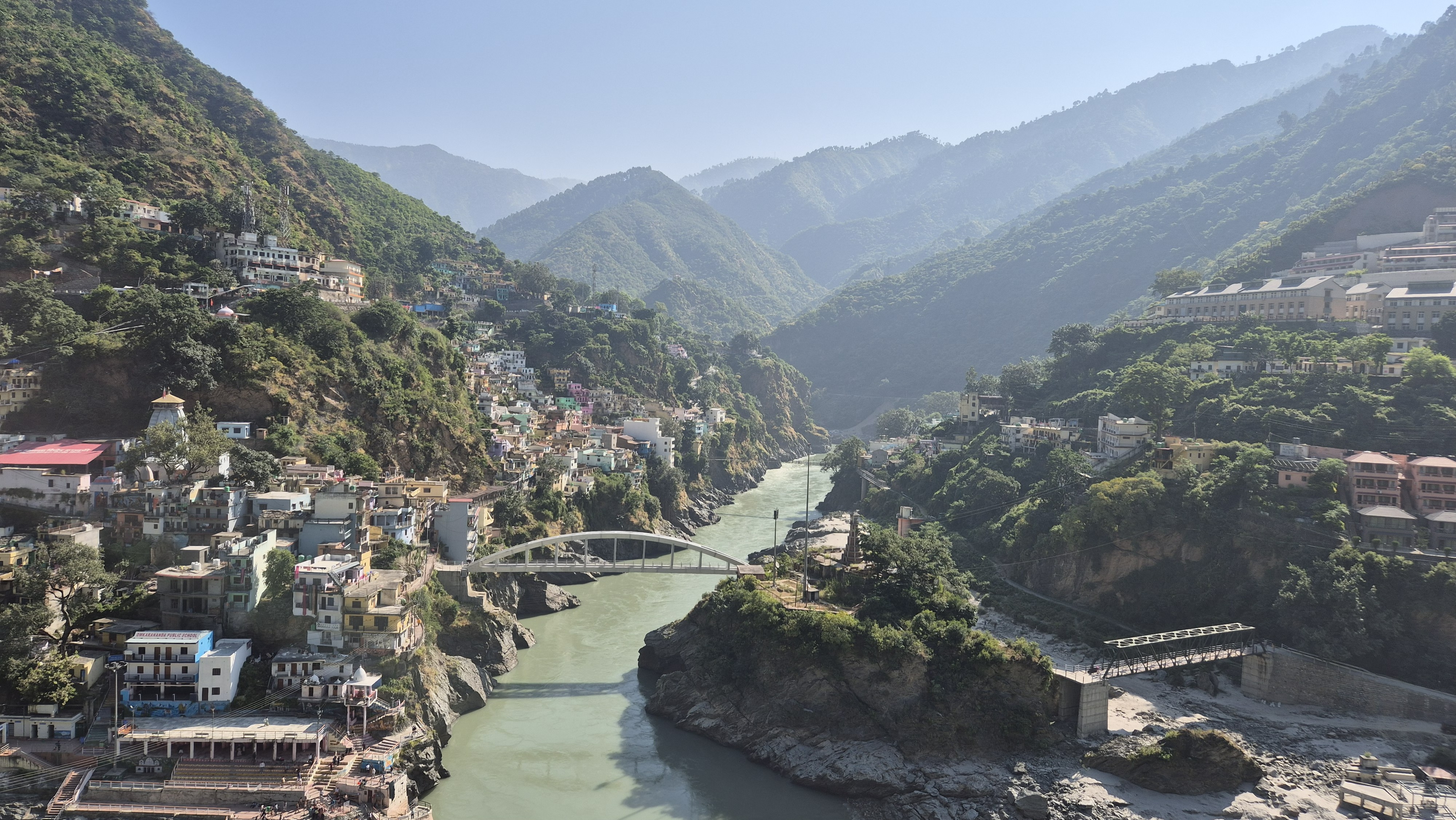
Devprayag Confluence
Watching the majestic confluence of Bhagirathi and Alaknanda rivers forming the holy Ganga at Devprayag.
Malyasu Valley
The winding mountain highway runs alongside a deep gorge with the roaring Alaknanda River below.
Rudraprayag Sangam
The stunning confluence where the calm green Alaknanda meets the turbulent muddy Mandakini River.
DhariDevi Shrine
Paying our solemn respects to the guardian deity of the holy shrines along the Alaknanda.
Mahargaon Valley
Lush emerald stepped farming terraces carved into mountainsides under a perfectly clear autumn sky.
Guptkashi Peaks
Driving through the misty high-altitude mountain passes as we draw closer to the holy destination.
Gaurikund Halt
A restful evening at our base hotel in Gaurikund before commencing our climb tomorrow dawn.
Trek Begins
On October 14, around 4:45 in the morning, we began our most awaited solo trek toward Kedarnath Temple.
Kedarnath Temple stands at an altitude of approximately 3,583 meters (11,755 feet) above sea level. The trek
from Gaurikund to Kedarnath is around 16 kilometers and usually takes between 6 to 9 hours depending on fitness,
weather, crowd conditions and altitude adaptation.
Initially, we were extremely energetic and excited. But very soon we realized the real challenge of the journey.
The path was crowded with thousands of pilgrims, horses, mules, palkis and porters. Because horse riding is one
of the most common transport options toward Kedarnath, the route remained congested almost throughout the day.
In many narrow stretches we had to stop repeatedly to let horses pass safely.
Despite the slow movement, the beauty of the Himalayas constantly motivated us. The Mandakini River flowed
beside the trekking route, creating a powerful natural soundtrack throughout the journey.
Jungle Chatti
The first major resting point after Gaurikund was Jungle Chatti. The trail initially passed through
forest-covered areas with a relatively gentle incline. Small food stalls, tea points, medical assistance
centers and resting places were available there.
The cold air, combined with the smell of wet mountain soil and the sound of distant temple chants, made the
experience feel surreal. Although physically demanding, the trek slowly disconnected us from everyday city life.
Bheembali
After Jungle Chatti, we continued toward Bheembali. The path gradually became steeper and the crowd increased
significantly. At several places we saw pilgrims resting beside the river, drinking tea or simply gathering
strength for the remaining climb.
Bheembali had tent accommodations, toilets, food stalls and even Wi-Fi connectivity in some sections. This
place became an important recovery point for many tired trekkers.
Our group also slowed down considerably by then because continuous horse movement created muddy and slippery
trail conditions. Walking carefully became more important than walking fast.
Linchauli
The stretch between Bheembali and Linchauli was probably the toughest part of the trek. This section included
steep climbs where the effects of high altitude slowly started becoming noticeable.
Linchauli is divided mainly into Choti Lincholi and Bara Lincholi. Bara Lincholi serves as a major base camp
area during the yatra season with large tent facilities, medical camps, community kitchens and security
support.
As we moved higher, the dense green landscape slowly transformed into rocky Himalayan terrain. Snow-covered
peaks started becoming visible in the distance and every few minutes we stopped simply to admire the scenery.
Fatigue was becoming intense by then, but emotionally we felt stronger with every kilometer.
Trek Commences
Embarking on the arduous sixteen kilometer mountain trail from Gaurikund with immense spiritual devotion.
Jungle Chatti
A beautiful waterfall cascades down the vertical rocky cliff sides along the initial forest trail.
Bhimbali Stop
A crucial mountain resting point where exhausted pilgrims gather to catch their breath and stay warm.
Mandakini Stream
The powerful turquoise waters of the wild Mandakini river carving their way through rocky Himalayan
valleys.
Mountain Pathway
A paved concrete walkway with safety railings hugging the steep edges of deep mountain valleys.
Suspension Bridge
Pilgrims carefully cross the steel suspension bridge hanging high above the roaring glacial river
torrents.
Lincholi Route
Trekkers carefully navigating the slippery mud and loose rocks as they approach the high Lincholi camp.
Temple Arrival
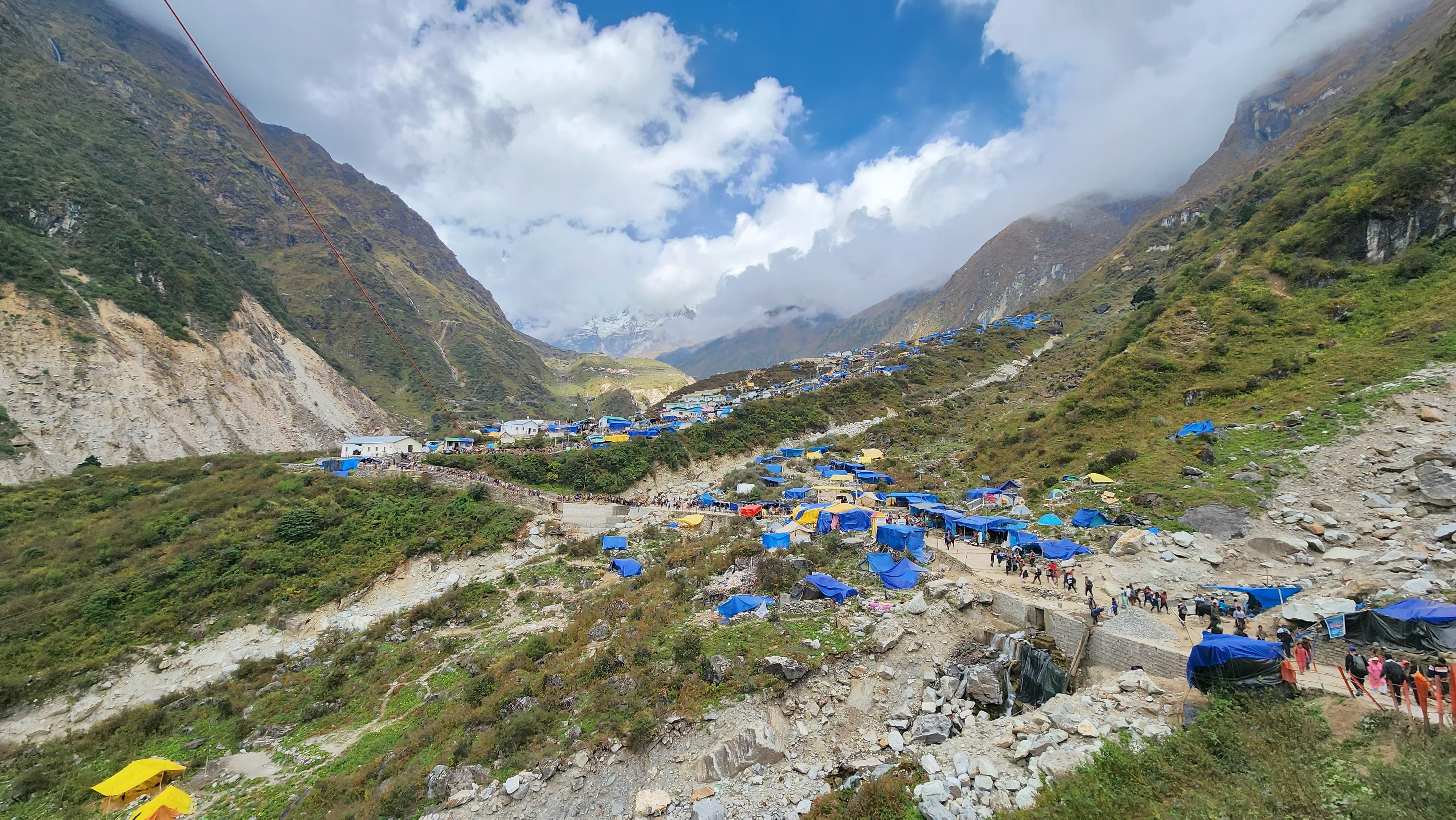
By evening, after hours of continuous trekking, we finally reached Kedarnath. The first sight of the temple
standing proudly against the massive Himalayan backdrop is impossible to describe
completely in words. Exhaustion disappeared instantly. The cold wind, the chants of “Har Har Mahadev,” the
prayer bells and the sight of pilgrims crying emotionally after reaching the shrine created an atmosphere
beyond ordinary travel experiences.
We booked a basic stay facility with room accommodation for the night. At that altitude, even simple shelter
feels luxurious.
That evening, we attended the temple prayer and aarti. Watching the evening rituals at Kedarnath was one of the
most peaceful moments of our lives. The entire temple complex glowed under lights while devotional chants echoed
through the mountains.
Plan Change
The next day, we initially planned to visit Vasuki Tal, the famous high-altitude glacial lake located around 8
kilometers from Kedarnath Temple at approximately 14,200 feet.
However, Himalayan weather changes very rapidly. Due to sudden weather deterioration and safety concerns, we
finally decided to cancel the Vasuki Tal plan for this trip.
Although we felt disappointed for a moment, mountain journeys always teach an important lesson — sometimes
returning safely becomes more important than completing every destination.
Nearby Places
Instead of continuing toward Vasuki Tal, we explored nearby sacred places around Kedarnath.
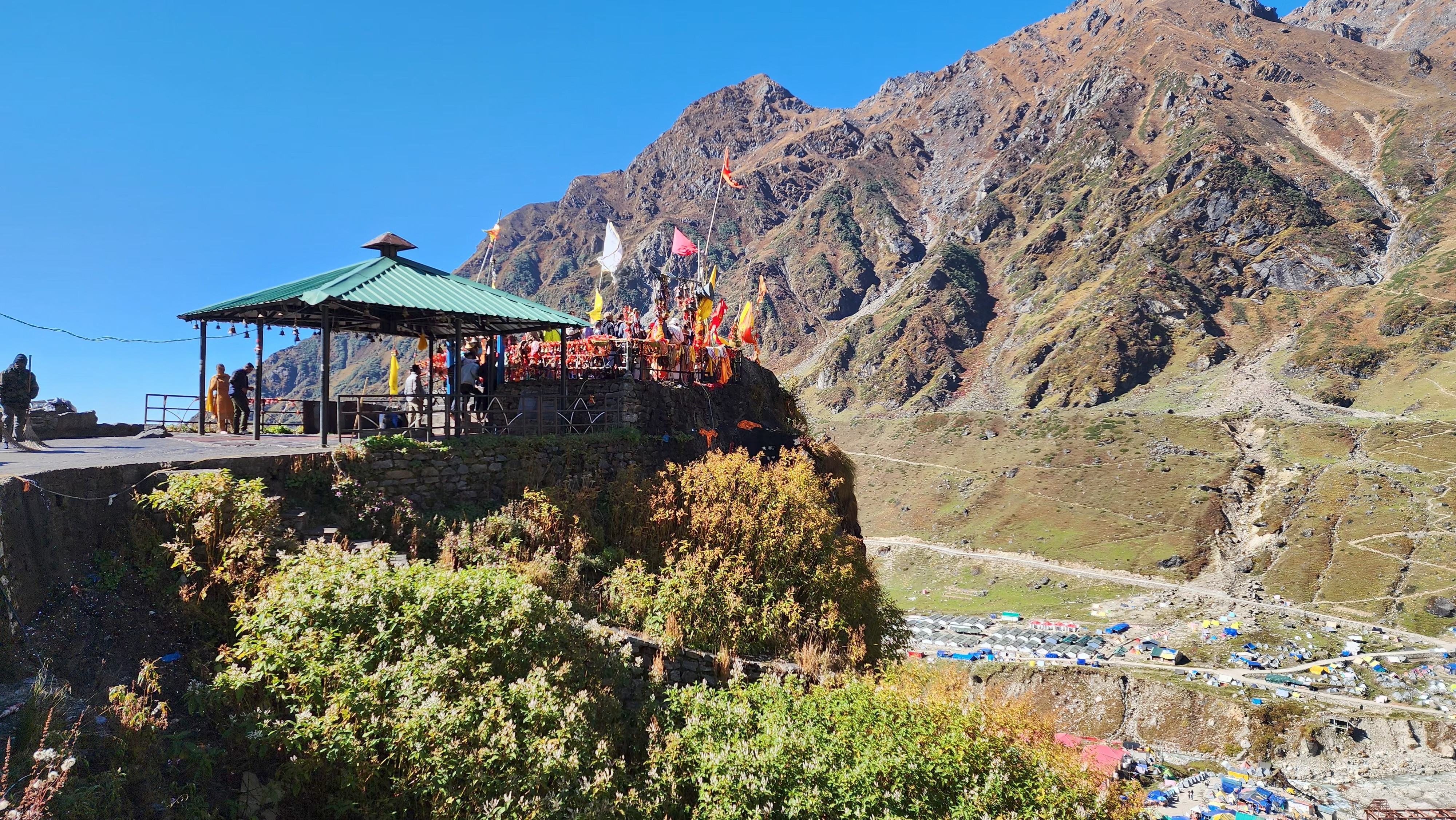
We visited Bhairavnath Temple, located slightly uphill from the main temple. The temple is dedicated to Baba
Bhairav, believed to protect Kedarnath during harsh winter months when the main shrine remains inaccessible.
We also visited Bheem Shila, the massive sacred boulder located behind the temple. Pilgrims believe this giant
rock protected Kedarnath Temple during the devastating 2013 floods.
Another spiritually significant place nearby was the Adi Shankaracharya Samadhi, the resting place of the great
8th-century philosopher and saint Adi Shankaracharya, who played a major role in reviving the temple centuries
ago.
Each location carried its own history, legends and emotional depth.
Night Pooja
One of the most special moments of our Kedarnath journey was attending the special VIP pooja inside the temple
during the night.
Around 3 AM, in the freezing Himalayan cold, we entered the temple premises for the sacred पूजा. The atmosphere
inside the ancient stone temple was beyond words. The sound of Vedic chants, the fragrance of incense, the
ringing bells and the divine presence of Lord Shiva created an experience that felt deeply spiritual and
emotional.
Standing there with my wife and our friends during those silent early morning hours became one of the most
unforgettable memories of our lives. It no longer felt like a normal trip or trek. It felt like a spiritual
connection with the Himalayas themselves.
Sacred Trishul
The historic temple viewed from the rear showing the towering iron Trishul standing against grey stone
walls.
Evening Illumination
The gorgeous glowing entrance of the sacred Kedarnath temple under soft golden lights in the freezing
evening.
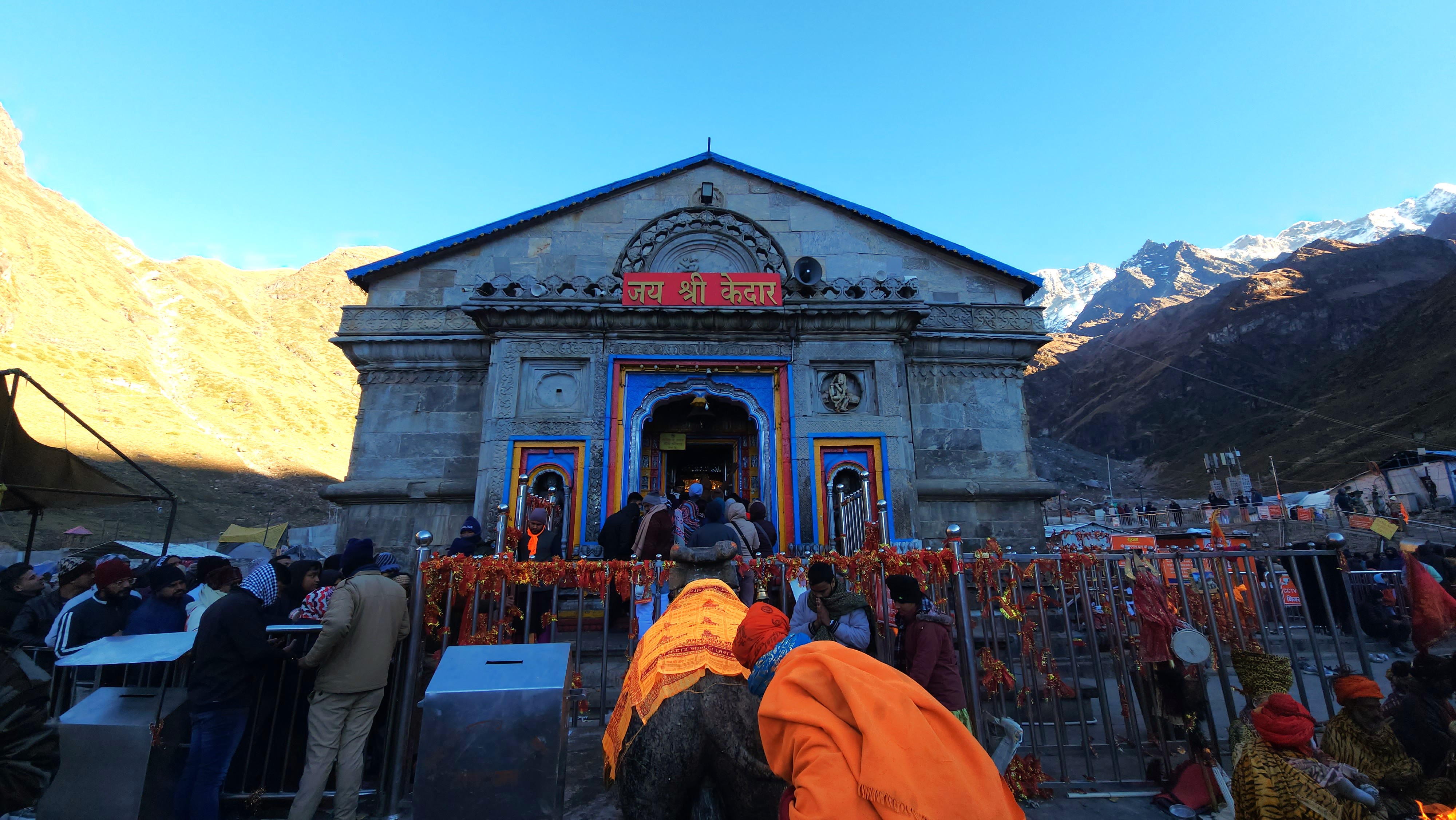
Temple Majesty
The grand stone facade of Kedarnath Mandir stands proudly underneath clear blue skies and snow-capped
Himalayan peaks.
Evening Aarti
Listening to the powerful ringing of brass bells during the grand evening prayers inside the temple
courtyard.
Divine Protector
The legendary Bhim Shila rock decorated with fresh flowers under soft lights behind the main temple
structure.
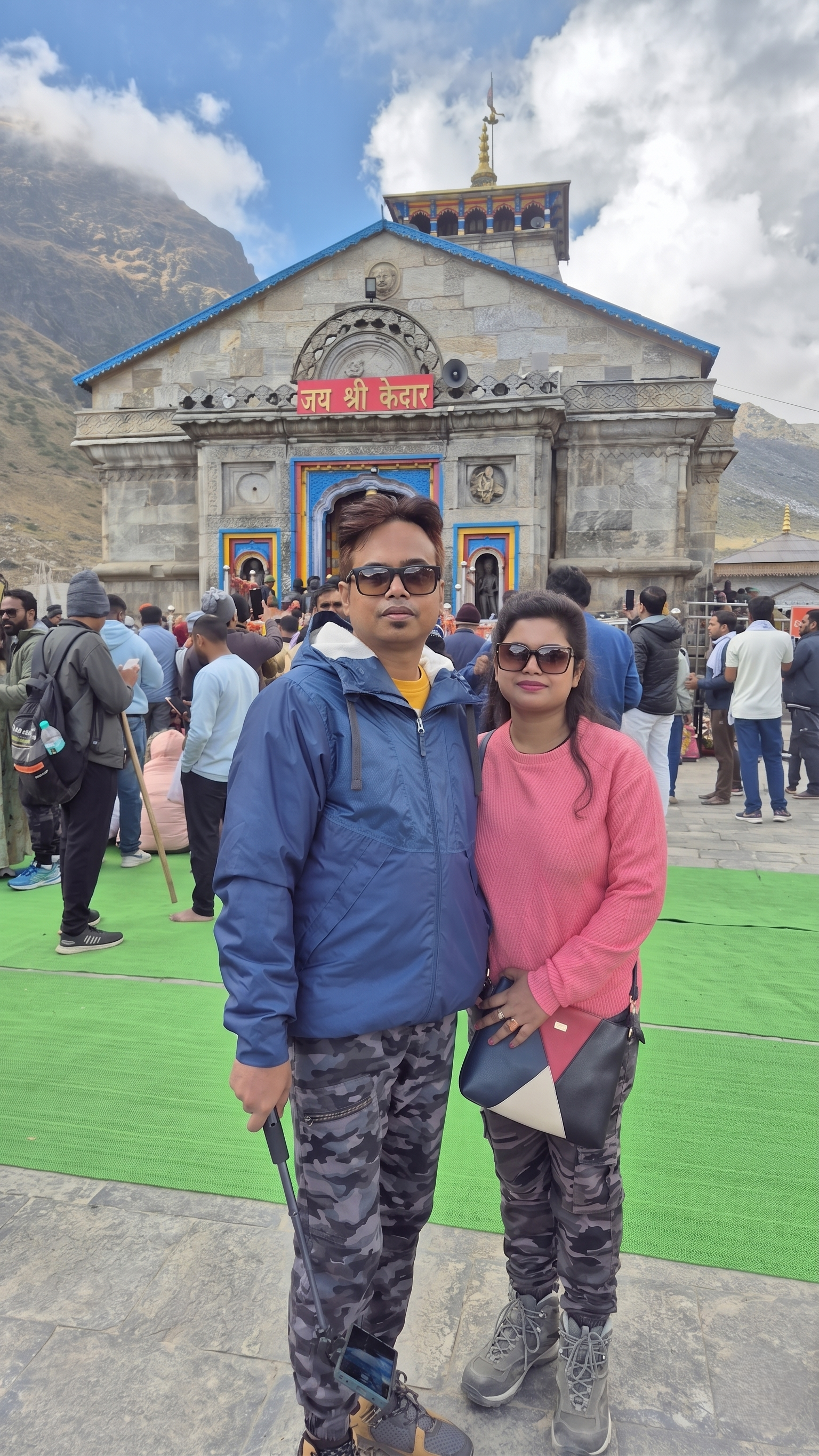
We are Here
Photo captured in front of the ancient stone temple after successfully completing the trek.
Bhairav Temple
A challenging steep climb brings us to the historic high-altitude shrine overlooking the entire Kedarnath
valley.
Return Journey
Later, we started our return trek toward Gaurikund at 7:30 AM. Interestingly, descending took much less time
compared to climbing. Although our legs were tired, mentally we felt lighter and more confident after
successfully completing the Kedarnath trek.
By afternoon, we finally reached Gaurikund again and then returned to Sonprayag using the local shuttle service.
The feeling during the return journey was very different from the excitement of arrival. This time, there was
silence, reflection and gratitude.
But our Himalayan adventure was still not over. Our next destination was Chopta, from where we planned to
continue toward Tungnath Temple and Chandrashila.
Even after completing Kedarnath, the mountains kept calling us toward newer paths and deeper experiences.
Final Thoughts
Kedarnath is not simply a tourist destination or a trekking route. It is a journey that changes people
emotionally, physically and spiritually.
For us — this October 2024 journey became much more than a trek. It taught us patience during uncertain ticket
bookings, teamwork during difficult climbs, adaptability during changing
weather and gratitude after reaching one of the holiest places in the Himalayas.
The mountains tested us repeatedly, but in return they gave us memories that will remain with us forever.
Even today, whenever we hear “Har Har Mahadev,” our minds instantly travel back to those cold Himalayan paths,
the sound of the Mandakini River, the crowded trekking route filled with horses and pilgrims, the peaceful
evening aarti and that unforgettable first glimpse of Kedarnath Temple standing silently among the mountains.
Descending Valley
Commencing our long return journey down the valley under a bright and crisp autumn morning sky.
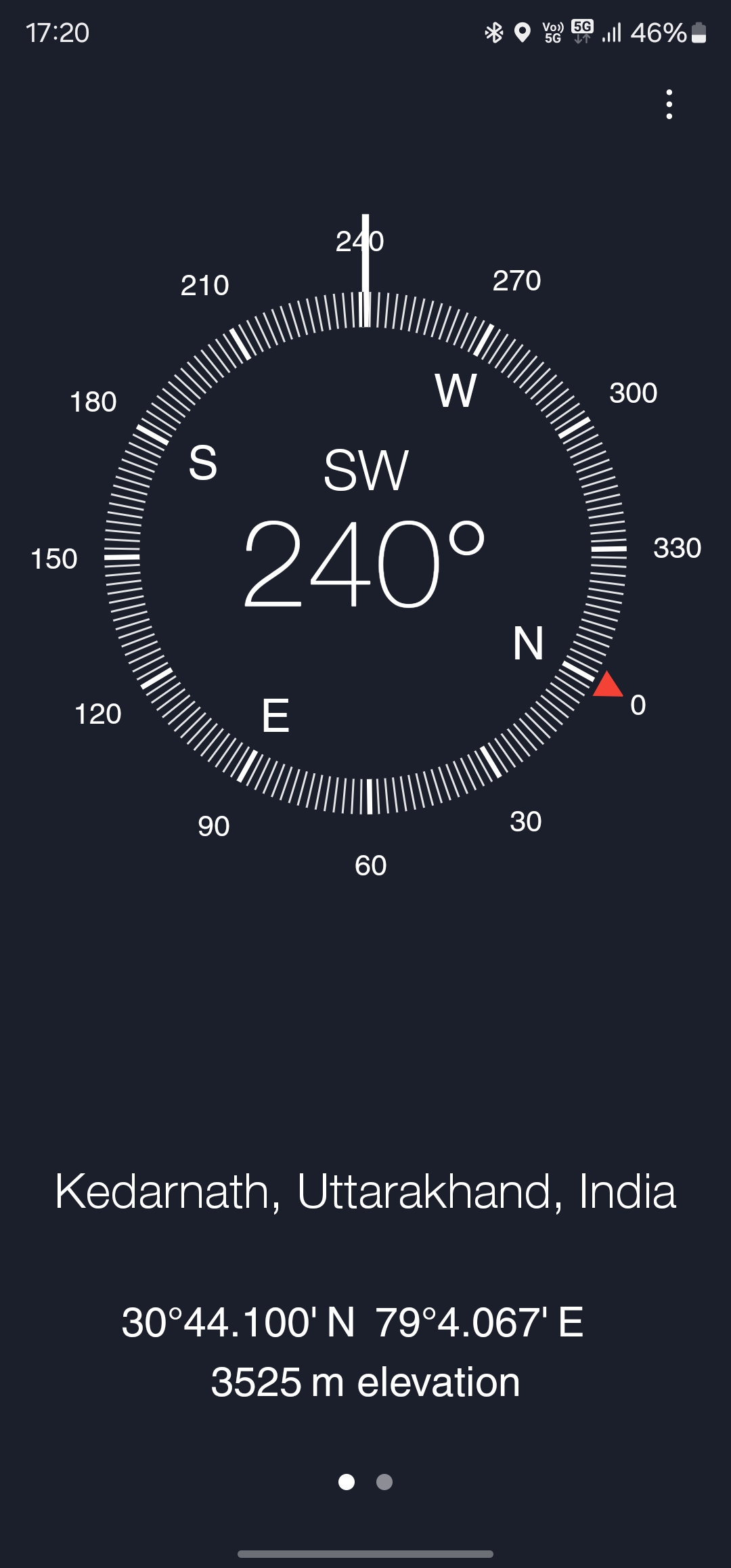
Temple Altitude
The yellow elevation marker board proudly displays the high altitude of the sacred Himalayan shrine.